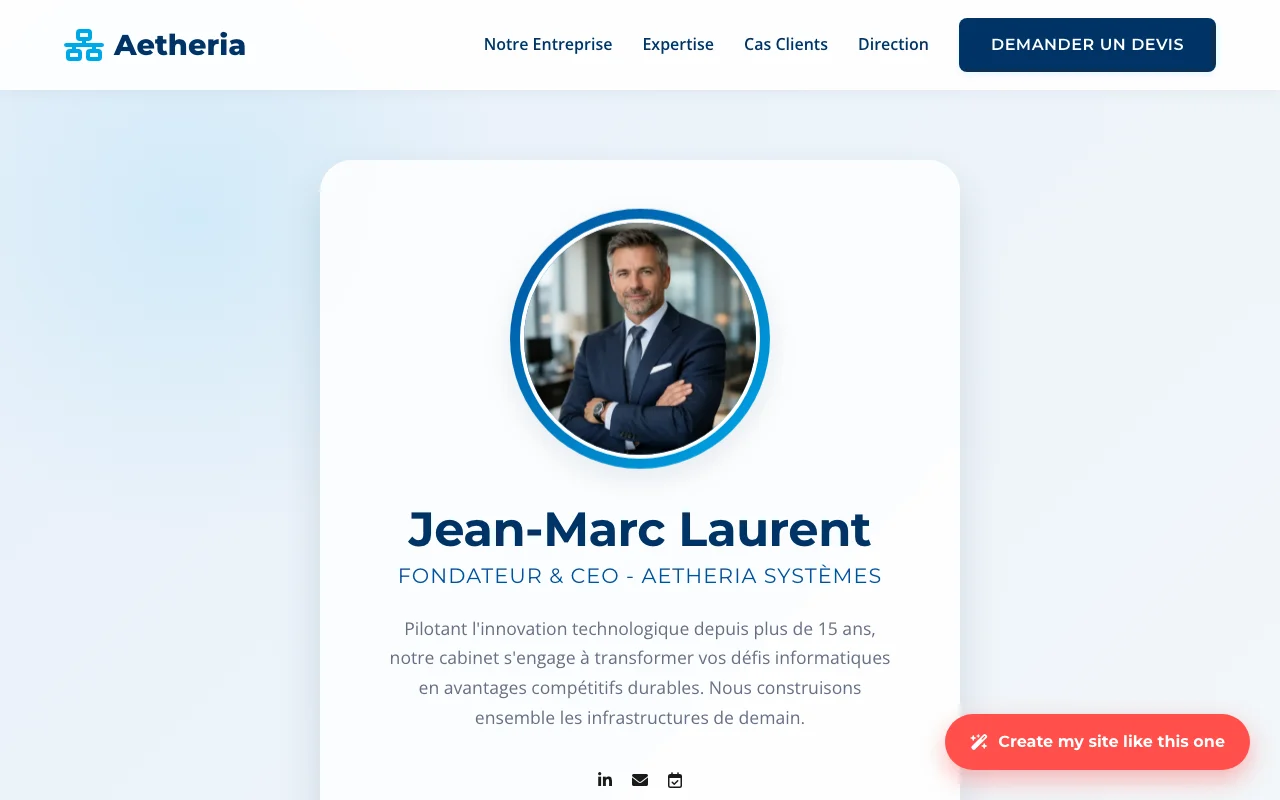
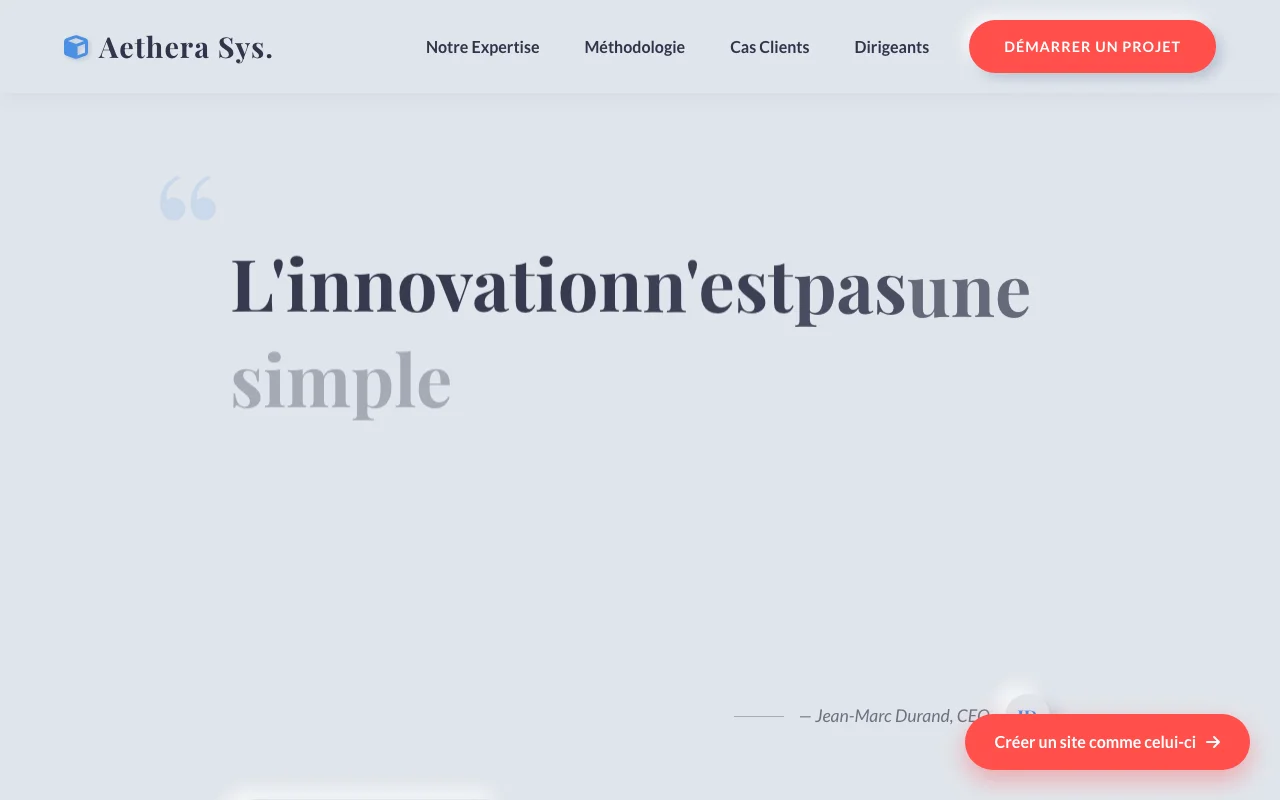
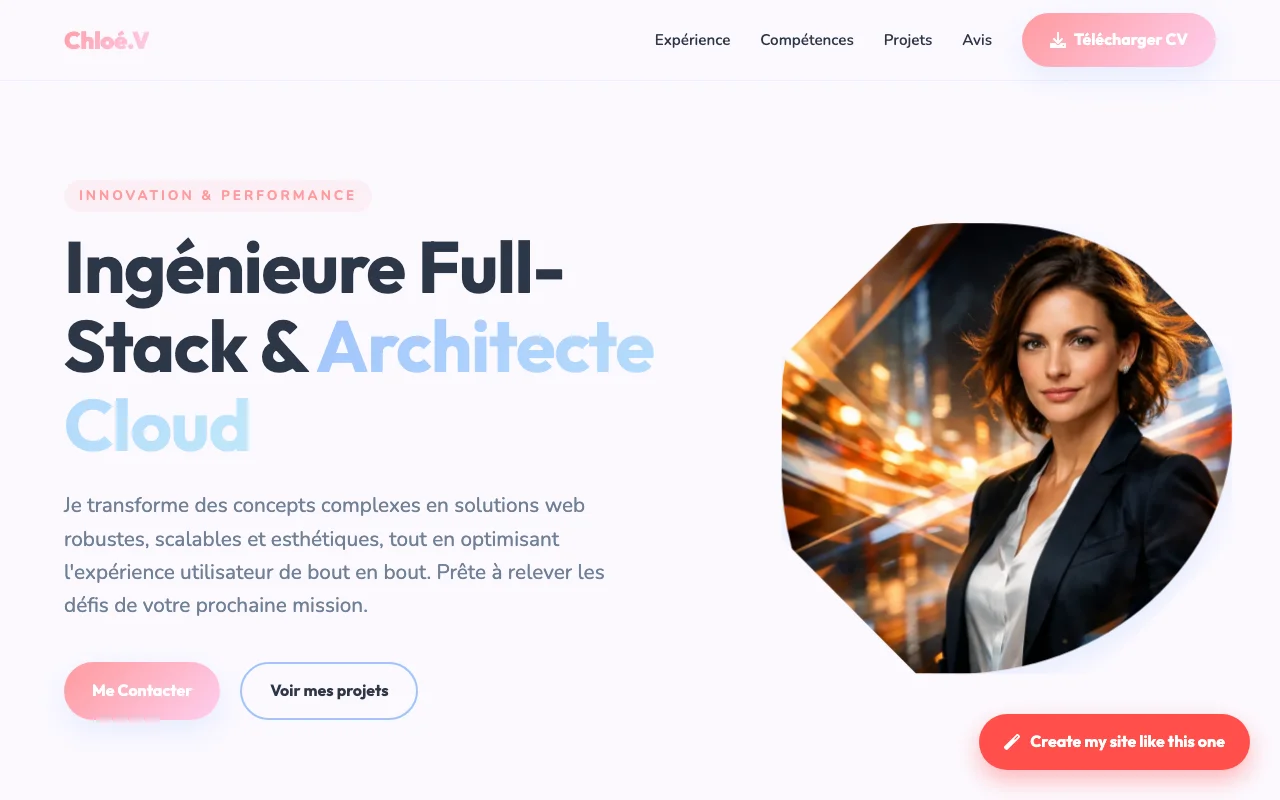
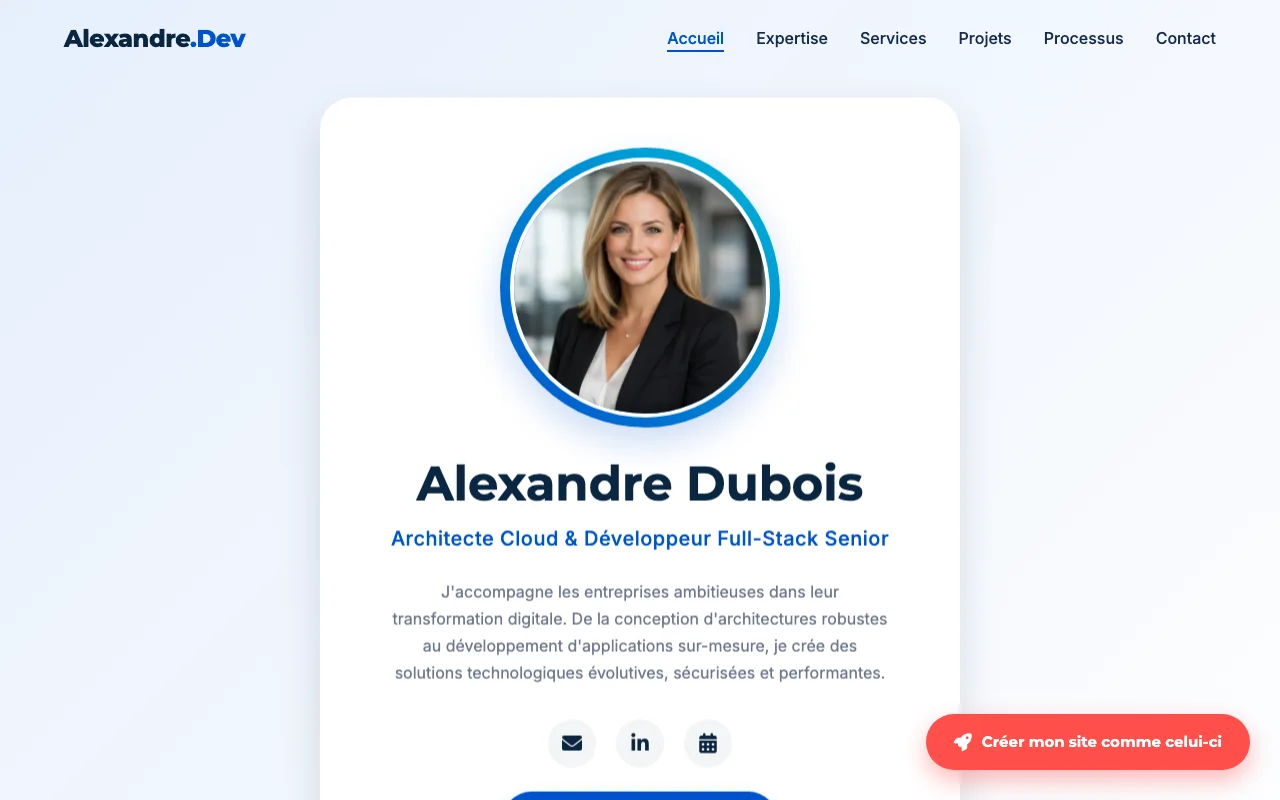
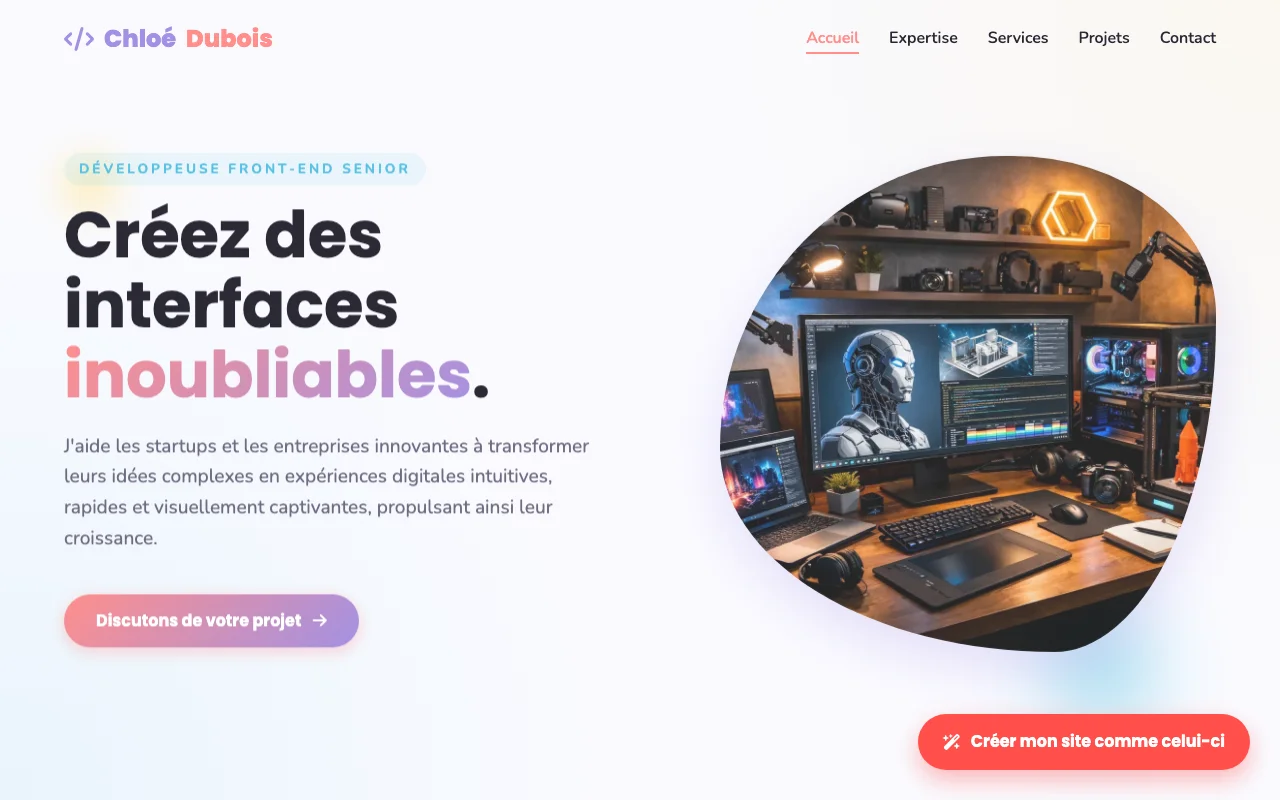
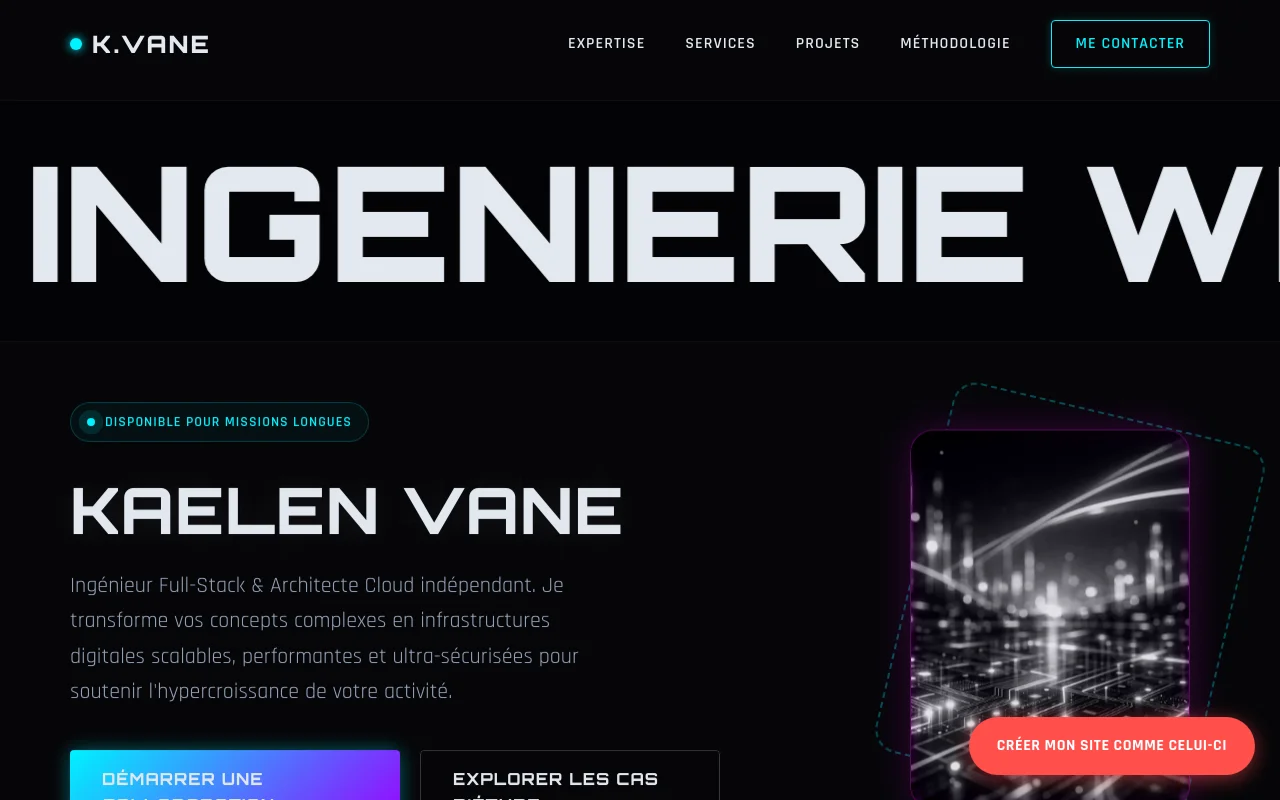
For an IT professional, your website is paradoxical: everyone tells you having a site is crucial, yet 80% of developers have GitHub instead. But GitHub isn't a website: it's a code repository. Your site is what proves you can ARTICULATE your work to a non-technical human, who is often the one deciding your mission or hire. Whether you're a developer, software engineer, cybersecurity expert, full-stack, backend, frontend, DevOps, data engineer, data scientist, UX/UI designer, web designer, product owner or product manager, your site makes the difference between staying technical-only and accessing the best missions.
The essential elements of a tech site that converts: your main technical stack in the hero (Python/Django, React/Node, Java/Spring, AWS/Terraform, etc.). The recruiter or client scans; they must see your techs in 3 seconds. Your project portfolio with, for each: business context, technical problem, your role, technologies, and GitHub link or live demo. Not just "I did Python". Your quantified results when available: "reduced API latency from 800ms to 80ms", "migrated 200 microservices to Kubernetes", "developed an MVP that raised $2M". Your cloud certifications (AWS, GCP, Azure), Scrum, security, or specific vendor certifications. A technical blog or articles on specific topics proves your depth. Your GitHub profile well-organized and quickly accessible.
To avoid: a "I'm passionate about new technologies" site without specifying which ones; too many visual effects that hurt LCP (you sell performance, your site must be 100 Lighthouse); no link to viewable code; absence of positioning (freelance, full-time, full-remote, independent).
Kyrlo generates your tech portfolio in 5 minutes from your CV or LinkedIn. Choose tech-punch style for engineers or cinematic for UX/UI.